
Last updated November 21, 2026
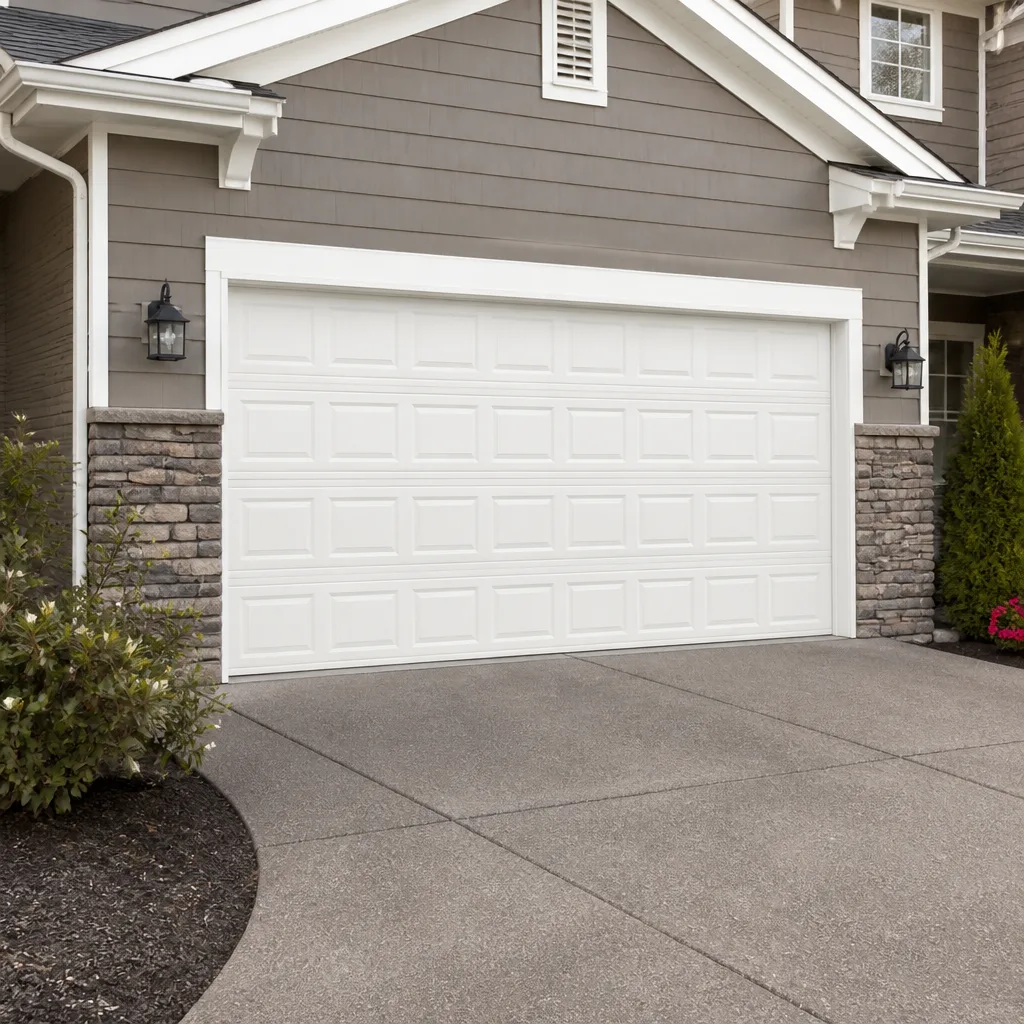 Raised-panel steel
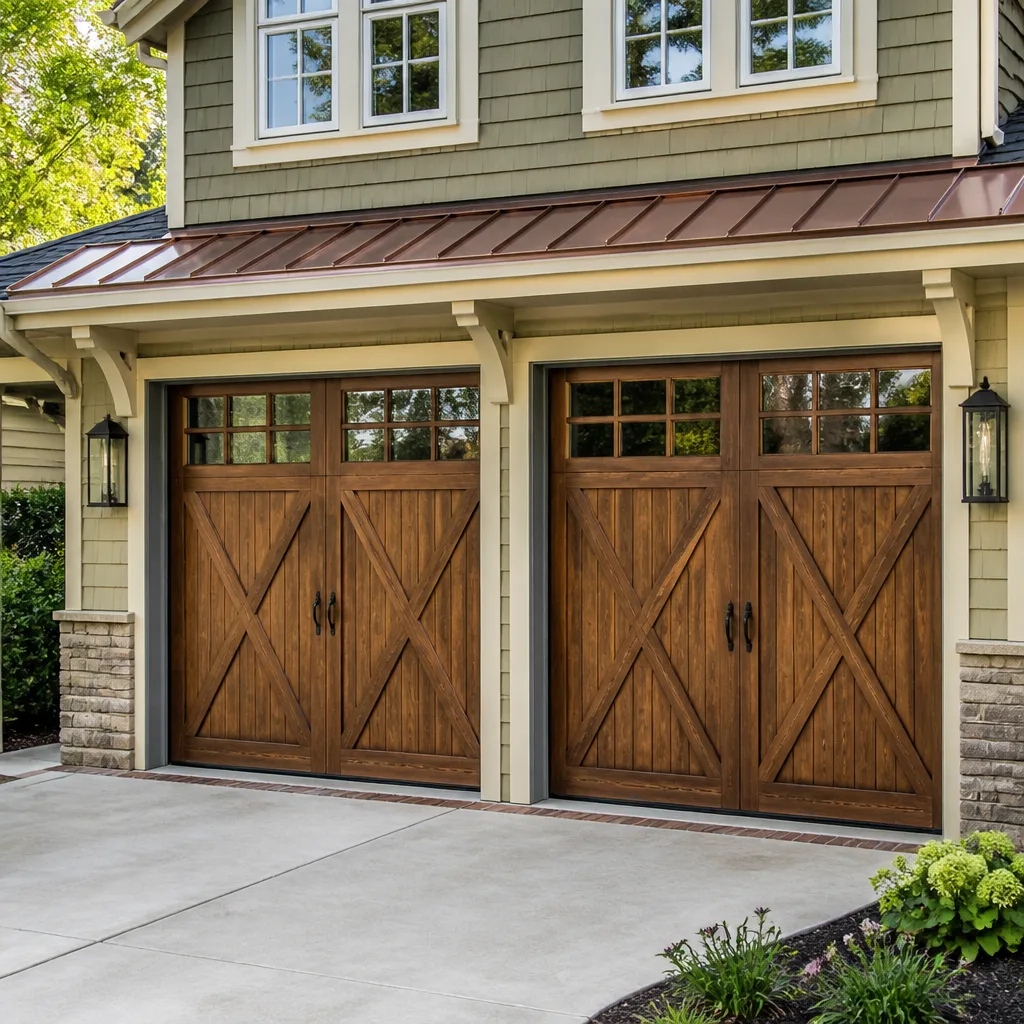 Carriage house
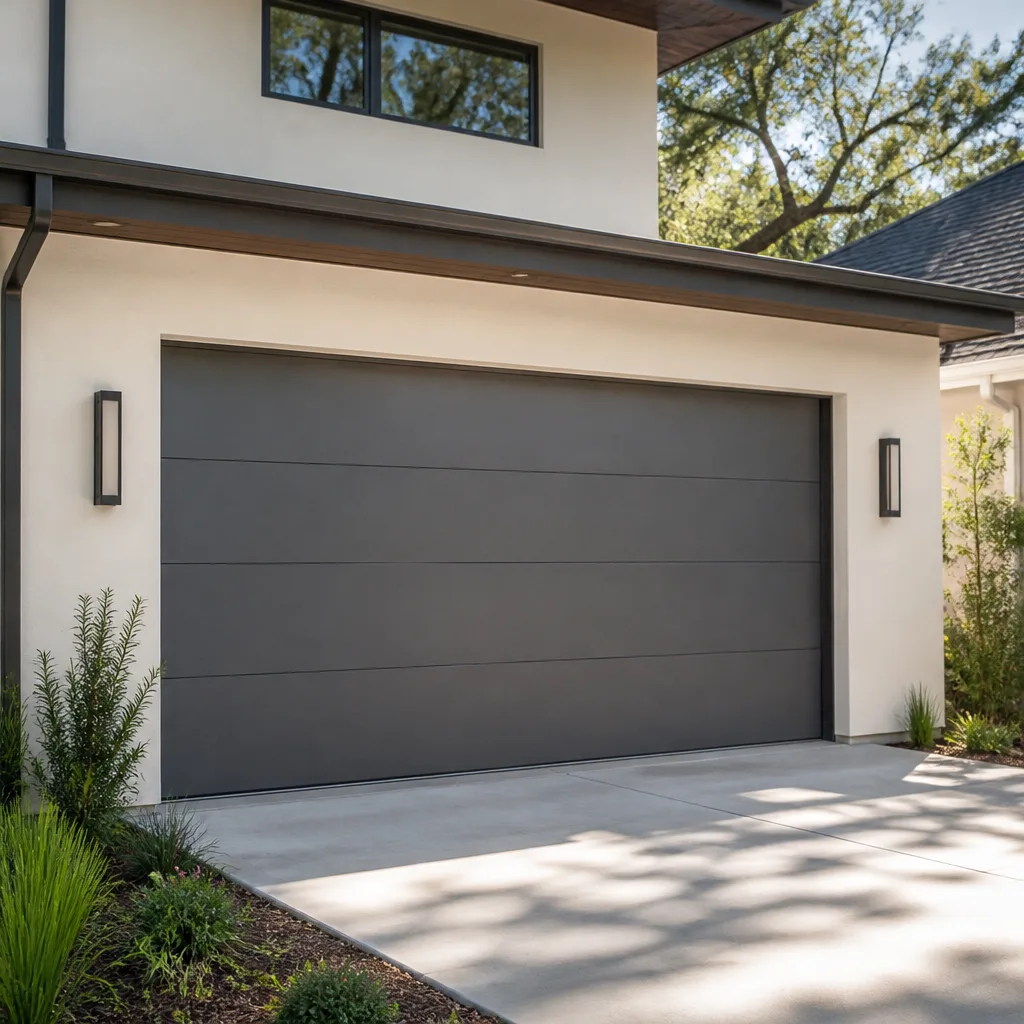 Modern flush
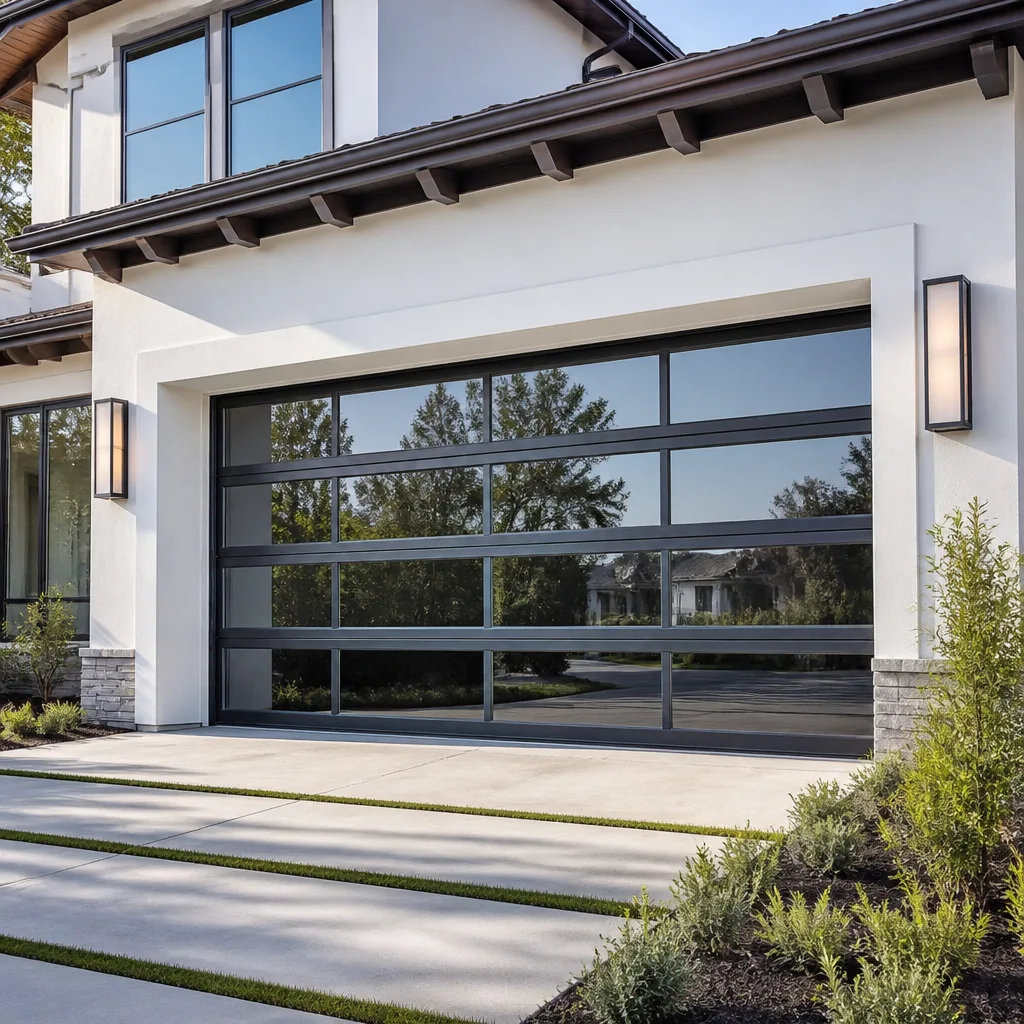 Full-view glass
 LiftMaster openers
 Chamberlain openers
Full 25-point door and opener safety check with every visit - springs, cables, rollers, tracks, and your LiftMaster or Chamberlain opener included
You get a price before we start. It does not change when the pro arrives.
Get your free estimateGarage Door Warning Signs: A Bay Ridge Homeowner’s Reference Guide
A grinding noise and a slow-moving door both get called “warning signs,” but they sit at opposite ends of the risk scale. One usually means a dry roller needs lubrication. The other can mean a torsion spring is a few cycles from letting go under heavy stored tension. Treating those two the same way is how homeowners end up hurt or facing a much bigger repair. This guide sorts the symptoms into three clear tiers – monitor it, schedule service this week, and stop using the door now – so you know exactly how to react the moment something in Bay Ridge starts sounding or looking wrong.
Quick Answer
Garage door warning signs fall into three tiers: cosmetic or minor issues you can monitor (squeaks, light vibration, a slightly stiff roller), mechanical problems you should schedule service for within the week (uneven travel, a door that reverses on its own, visible cable slack), and stop-now hazards that mean keeping the door shut until a professional inspects it (a snapped spring, a hanging cable, a door stuck half-open, or a broken bottom bracket). The tier depends on which part is failing, not how loud the noise is. A quiet door with a broken spring is far more dangerous than a noisy one with a worn roller.
Styles & brands we work with
- Raised-panel steel
- Carriage house
- Modern flush
- Full-view glass
- LiftMaster openers
- Chamberlain openers
Table of Contents
- The Three-Tier Severity System
- Tier One: Monitor These Warning Signs
- Tier Two: Schedule Service This Week
- Tier Three: Stop Using the Door Now
- Opener Strain vs. Spring and Cable Strain
- Visual Inspection Cues That Need No Tools
- Why Intermittent Failures Are More Urgent Than Consistent Ones
- Bay Ridge-Specific Environmental Warning Signs
How Do You Sort Garage Door Warning Signs by Severity?
Sort every symptom by which mechanical system is failing, not by how alarming it sounds. The door is a balanced system held under tension, and the parts under that tension – torsion springs, extension springs, cables, and the bottom brackets that anchor the whole assembly – are the ones that can cause harm when they give way. A noisy but intact door is an annoyance. A quiet door with a visible gap in a spring is a hazard. That distinction is the entire point of this reference.
We’ve worked on thousands of doors, and the pattern is consistent: homeowners focus on the motor because that’s the part they can hear and understand, while the real trouble is usually in the spring-and-cable system that the motor is straining against. The tier below is set by what’s failing, not by volume.
- Monitor it: Cosmetic or minor wear with no risk of a part failing under load. Lubricate, watch, and re-check in a few weeks.
- Schedule service this week: A part is out of adjustment or wearing fast. The door still works, but the failure will get worse and eventually stop the door entirely.
- Stop using the door now: A component has failed or is about to. Keep the door shut and call a professional before anyone tries to open it, by remote or by hand.
When you’re not sure which tier you’re in, that uncertainty itself points to Tier Two at minimum. The cost of a diagnostic is small next to the cost of guessing wrong on a tensioned part. For a full accounting of what the repair itself involves, see our page on garage door repair.
Tier One: Which Warning Signs Can You Just Monitor?
Monitor-tier signs are cosmetic or low-risk. They don’t affect balance, tension, or travel, and they won’t cause a part to snap. Lubricate the moving joints, tighten what’s loose, and check again in a couple of weeks. If any of these persist or get worse, they bump up a tier.
- Squeaks and grinding from the rollers or hinges. Metal-on-metal contact in the roller wheels or hinge joints. Usually responds to a garage-door-rated lubricant, not WD-40.
- A light rattle as the door comes down. Loose hinge screws or a panel bolt that needs a quarter turn.
- A slight vibration you can feel more than hear. A single worn roller. Replace it before it flakes and drops debris in the track.
- Weatherstripping that looks flattened. Not a safety issue, but it lets cold air and water in. Replace when the gap at the floor is consistent.
- A faint mark on the paint that wipes off. Contact between a panel and the frame. Watch it; it can progress to scraping.
What separates this tier from the next is whether the symptom involves anything under tension. Rollers and hinges carry the door’s weight but aren’t spring-loaded. Once you hear a symptom that seems to come from the center of the door or from the cables at the sides, you’ve moved to Tier Two. Roller and hinge work is well within the scope of a standard Garage Door Repair Bay Ridge visit, and it’s often worth bundling with a tune-up.
Tier Two: Which Signs Mean Schedule Service This Week?
Schedule-this-week signs mean a mechanical part is out of adjustment or wearing fast. The door still operates, which is exactly why homeowners delay – don’t. Left alone, these symptoms put more stress on the opener and the springs, and the eventual failure is bigger.
- The door travels unevenly. One side rises faster than the other. Usually a sign of a stretched cable, a worn drum, or a bent track.
- The door reverses on its own before hitting the floor. A safety sensor or travel-limit issue. Left unrepaired, the reverse trip stresses the opener every cycle.
- A gap at the top of the door when closed. The travel limit is set wrong or the door is out of balance.
- Visible slack in a lift cable. That means the cable has slipped or partially come off its drum. Don’t tug it; call it in.
- The door feels heavy when you lift it by hand. A balance problem. The springs are no longer carrying the door’s weight, so the opener is doing work it was never meant to do.
- The opener struggles and shudders. The motor is laboring. Nine times out of ten the fault is the door, not the opener. More on that below.
In Bay Ridge, this tier is where the weather between seasons plays a real role. A door that ran fine in mild weather suddenly feels heavy when the temperature swings, because the springs lose some lift and worn parts show their age. If you’re hearing the motor strain, it’s worth reading our notes on garage door opener repair before you assume the opener is the problem.
Tier Three: Which Signs Mean Stop Using the Door Now?
Stop-now signs mean a component under tension has failed or is about to. Keep the door closed. Don’t try to open it by hand and don’t hit the remote “just to see.” Every cycle on a failed spring or a loose cable increases the chance of a violent snap.
- A snapped torsion spring. You’ll hear a loud bang, sometimes find a gap in the spring coil above the door, and the door won’t lift by hand.
- A spring with a visible gap in the coil. Sometimes a spring breaks and the door still works briefly on the remaining tension. Any visible gap is a stop-now sign.
- A hanging or slack lift cable. The cable has come off the drum. It’s under tension even when it looks loose.
- A broken bottom bracket or hinge anchor. These hold the cable end. When they fail, the cable can whip.
- The door is stuck half-open or hanging crooked. A panel is binding, a track is bent, or a cable has failed. Don’t force it.
- The door has come off its track. The weight is unsupported and the panels can fall.
Spring and cable work is high-tension work, and it’s not a DIY repair. The energy stored in a wound torsion spring is enough to cause serious injury if the wrong tool slips. If you’re facing any of the signs above, call a professional. Here at Garage Door Repair Bay Ridge, we perform spring repair and replacement with the trained hands and correct tools that this job requires. Our technicians have up to 9 years of experience with tensioned components, and we service systems from Clopay, Amarr, and other leading brands.
For a full replacement rather than a repair – say the door is beyond saving after a long run – the pathway is different. That’s scheduled work, not emergency work, and you can read about it on our garage door installation page.
Why Do Homeowners Blame the Opener When the Door Is the Problem?
Because the opener is the part that makes the noise and has a brand name on it, homeowners assume it’s failing. Usually it isn’t. The opener is a relatively simple motor with a fixed amount of pull. The door’s weight is carried by springs and cables. When those lose their balance, the opener has to work harder than it was designed for – and that’s when it starts to strain, shudder, or trip its safety reverse. The motor is telling you the truth about the door.
The two failure modes sound different if you listen for them:
- Opener strain: the motor runs, whines, and the door barely moves or reverses. The chain or belt may be loose. The opener is doing its best against a heavy load.
- Spring or cable strain: a bang or pop, followed by the door dropping or refusing to move by hand at all. The mechanical balance is gone.
The practical difference matters because it decides whether you replace the opener or repair the door. Replacing a perfectly good opener because the door is out of balance is one of the most common waste-of-money repairs we see in Bay Ridge. Those openers – LiftMaster, Chamberlain, Genie, Craftsman – are built to spec and often outlast the door’s springs. The smart move is to have the door diagnosed first, and only then decide about the opener. If you’ve already replaced the opener and the problem persists, the door is the reason.
What Can You Check Visually Without Any Tools?
Most of the serious warning signs are visible from the floor with no tools at all. A two-minute walk-around once a month catches the problems early. The trick is knowing what normal looks like, because the failure is usually a gap or an asymmetry you’d otherwise ignore.
- Stand inside and look at the door closed. The gap under the door should be even from one side to the other. A slanted gap means the door is out of level.
- Look at the spring above the door. A torsion spring is a continuous coil. Any visible gap in the windings, or a broken coil resting loose, is a stop-now sign. On extension springs (the ones that run along the side tracks), look for the safety cable running through the center of the spring; if the spring has stretched or come loose from its anchor, that’s the same tier.
- Look at the cables at the sides. They should be taut against the drums at the top corners. Any slack, kink, or frayed strand is a call-us-this-week or stop-now sign depending on how far it has gone.
- Look at the track where the rollers ride. It should be straight and parallel on both sides. Any bend, kink, or curve beyond a hair is a service call.
- Look at the bottom seal. It should contact the floor evenly across the width. A gap at one end means the door is out of adjustment.
- Look at the wall where the springs mount. Rust streaks, cracked paint, or a gap between the mounting plate and the wall means the anchor is working loose.
If your walk-around shows any of the stop-now signs, don’t cycle the door to “test” it. Call. If it shows tier-two signs, we can schedule a visit, diagnose it, and quote a price before any work starts. Same-door, fixed-right repair is usually the right answer when the door still has life in it.
Why Is an Intermittent Failure More Urgent Than a Consistent One?
Counterintuitive, but true: a door that always sticks is a known, repeatable problem, and the failure is predictable. A door that sometimes sticks is closer to a full failure because the failure mode is unpredictable. The mechanism is usually a partly failed part that hasn’t come fully apart yet – a frayed cable with one good strand left, a spring that has cracked but not snapped, a roller bearing that has seized at a single point along the track. Those parts fail randomly, under load, with no schedule. That’s when someone gets hurt.
We treat consistent symptoms as one visit and intermittent ones as a higher priority, because the stakes are higher. A door that sticks every time is annoying; a door that sticks one time in five might drop half-open while someone is walking under it. The fix is often cheap – a cable swap, a roller replacement, a spring inspection – but the cost of ignoring an intermittent failure is the thing nobody wants to think about.
If you’re dealing with an intermittent symptom, write down what you were doing when it happened. Time of day, weather, whether the door was going up or down, whether anyone was near the sensors. That detail helps the technician trace the problem on the first visit instead of having to come back.
What Are the Bay Ridge-Specific Warning Signs?
Bay Ridge has its own environmental patterns that show up in door wear. Some are about the neighborhood’s housing stock – rowhouses and older detached garages sit close together, and driveways are often short, which changes how often the door is cycled and how much road grit gets into the track. Others are about the area itself. If you’re in Bay Ridge and your door is showing early wear, these are the signals we look for first.
- Rust streaking on the track hardware. Track bolts and rollers take on surface rust faster here than indoors, especially on doors that face west and sit exposed to weather for most of the day.
- Brittle bottom seals. The rubber seal that touches the concrete apron dries and cracks faster than the panels themselves. A brittle seal stops flexing, which lets grit and water in.
- Concrete apron changes affecting door contact. Older Bay Ridge garages sometimes have a short apron with a slight slope or a lip. As the apron shifts or pits, the bottom seal loses even contact with the floor, and the door either doesn’t close flush or pauses and reverses.
- Sagging wooden frames. A few of the older detached garages on the neighborhood’s side streets have frames that have moved a little. That shows up as a track that runs slightly out of plumb, which accelerates roller wear.
- Tight, low-clearance garages. Many Bay Ridge rowhouses have shallow garages where the door can’t fully swing if the track or spring lift lags a fraction. That shows up as a door that “just” doesn’t quite open.
None of these are reason to panic on their own. Each is a monitor-or-service sign depending on how far it has gone. The point is to check for them specifically during your monthly walk-around, because they’re easy to miss if you’re only listening for noise.
Common Mistakes to Avoid
- Assuming a noisy door means a bad opener. The noise is usually the door, not the motor. Diagnose the door first. Replacing a working LiftMaster or Chamberlain because of a bad roller is money down the drain.
- Pulling a “stuck” door with your hands to see if it will move. On a broken spring or loose cable, that’s the exact action that can whip a cable or drop a panel. Leave it.
- Blaming the safety sensors for everything. Sensors do cause a reverse, but intermittent reverses are usually mechanical. Check the track and cables before you touch the sensors.
- Oiling the springs or tracks. Lubricate hinges and rollers, not the spring coils or the track surface, which can collect grit and gum up.
- Replacing one spring when the pair is worn. The two springs share the door’s weight and wear together. Replacing one leaves the older one to carry a load it was never sized for.
- Ignoring a slanted gap at the floor. A gap that looks cosmetic is often the first evidence of a balance problem, and balance problems wear out openers.
- Waiting for the intermittent symptom to become permanent. By then you’re in the more urgent tier and the repair is bigger. Call when it starts, not when it stops.
See the difference
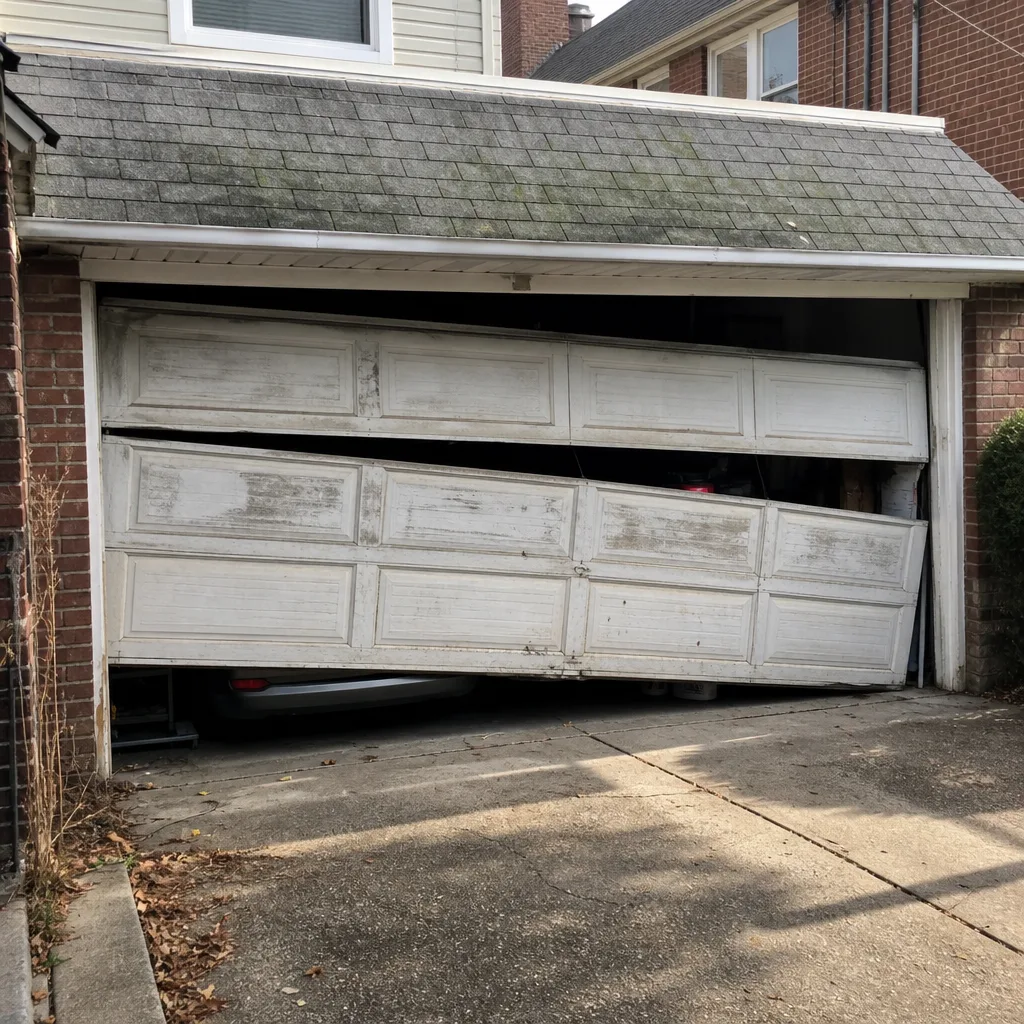 Before
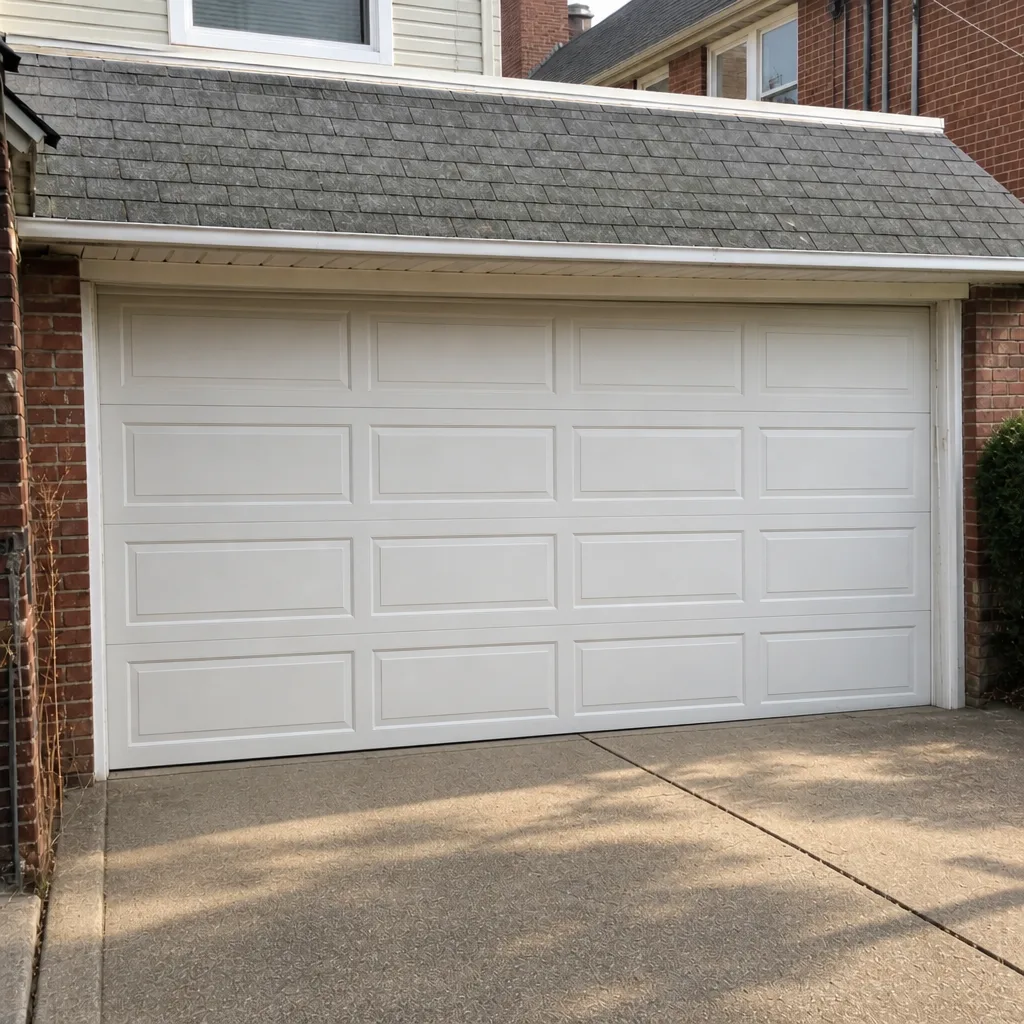 After
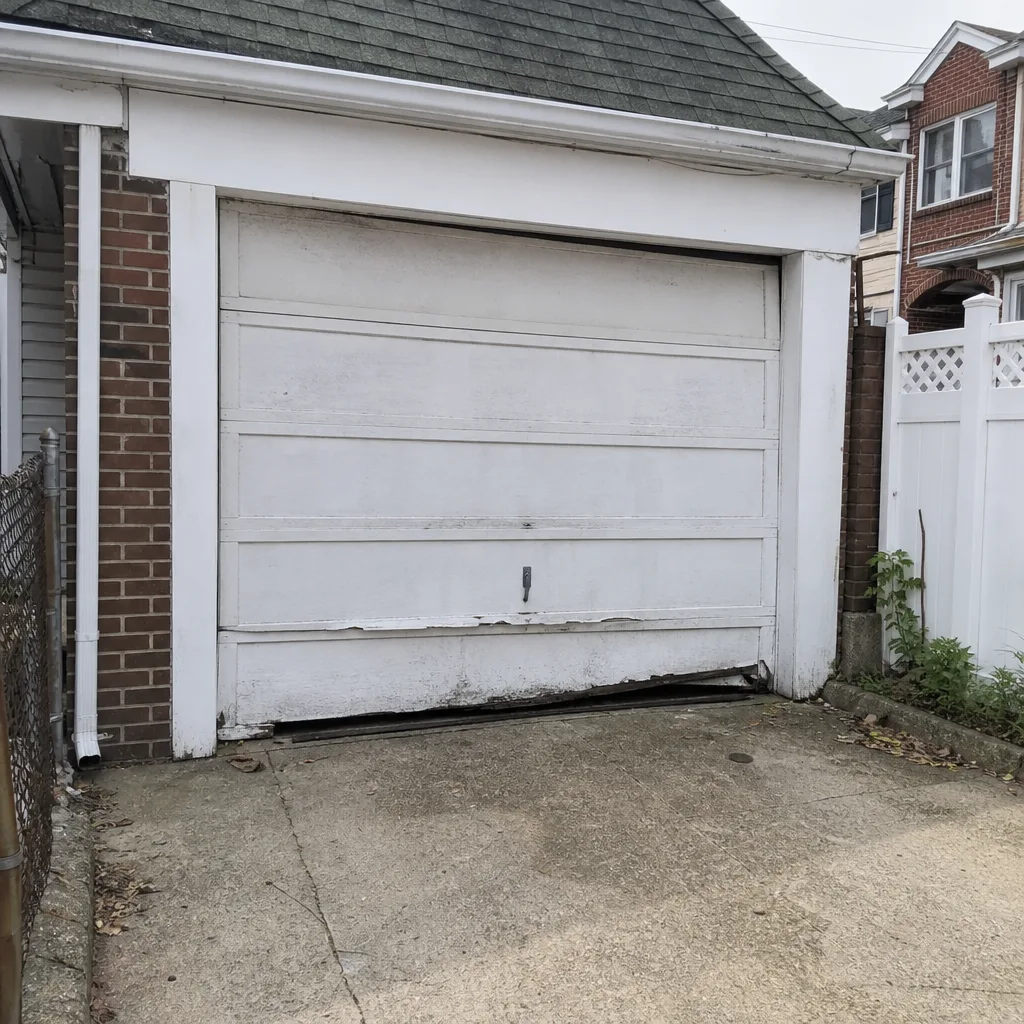 Before
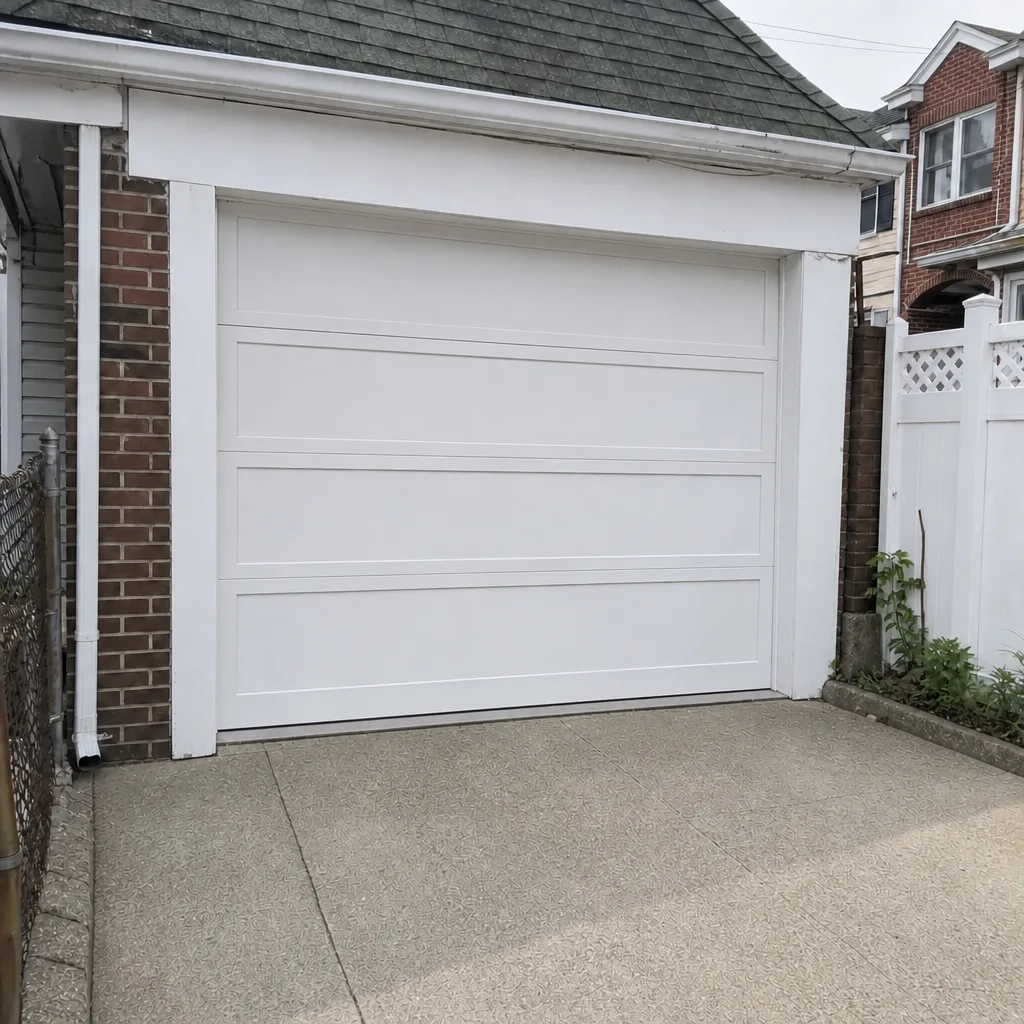 After
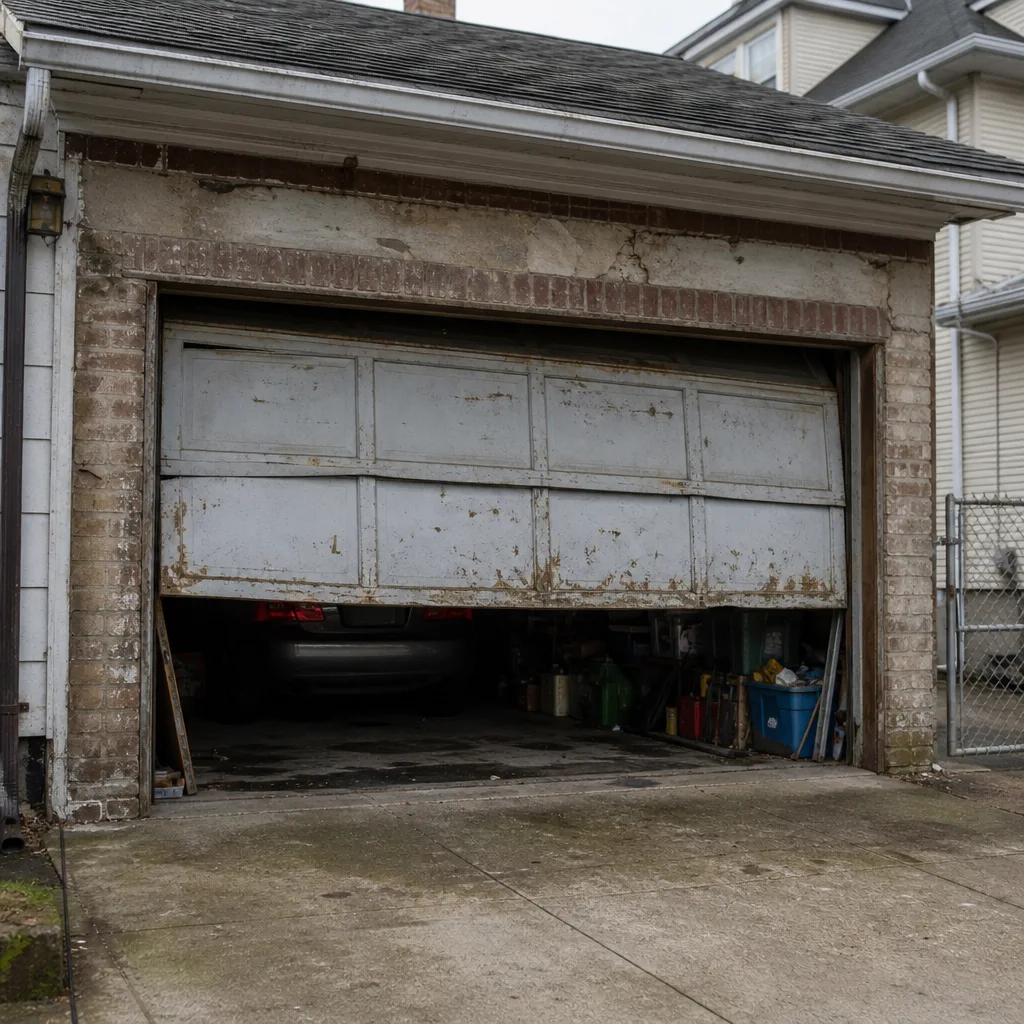 Before
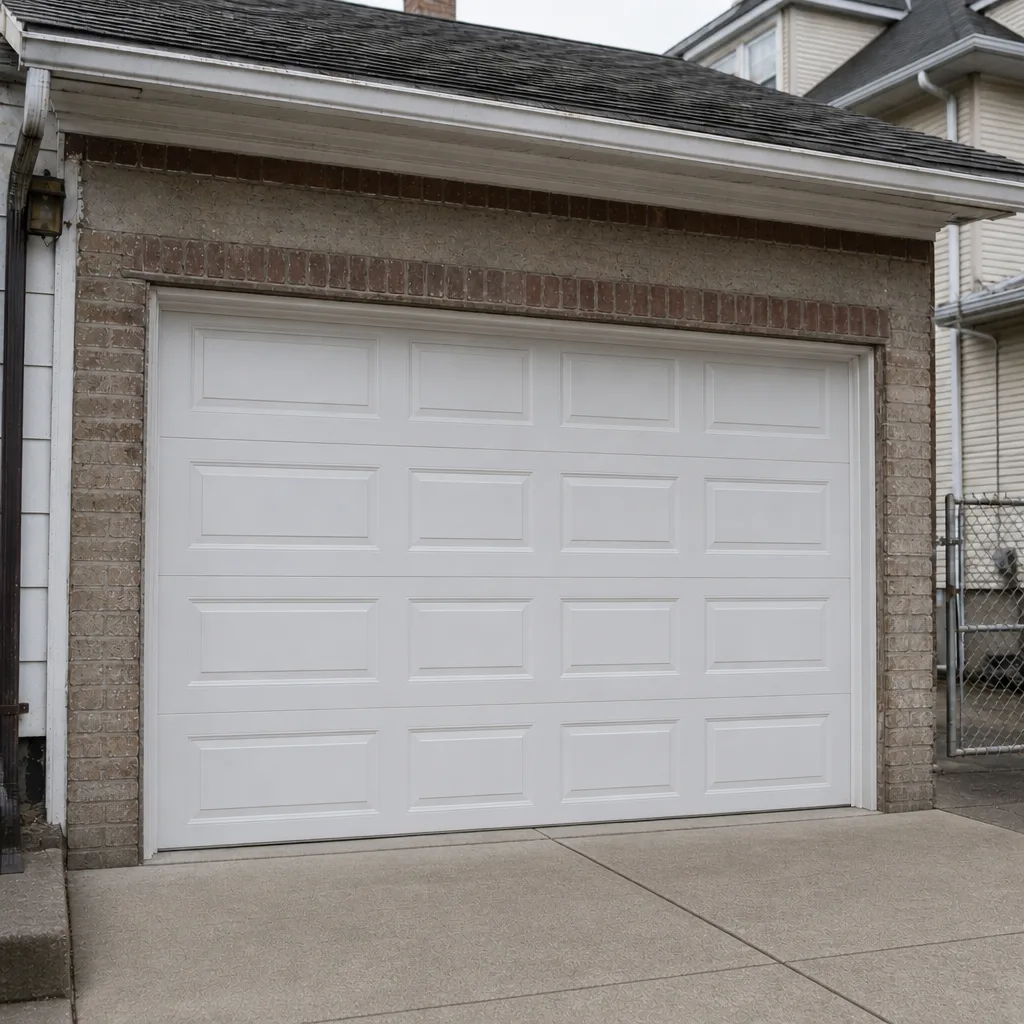 After
When to Call a Professional
Call a professional the moment you see a snapped spring, a hanging cable, a bent track, or a door that has come off its track. Call when the door is stuck, when it reverses on its own, or when the opener strains and shudders on a door that should be balanced. Call when the problem is intermittent – the unpredictable failures are the ones that hurt people. Call when the door is more than a year past a tune-up and any of the tier-two symptoms have shown up. Call when the bottom seal stops contacting the floor, when the concrete apron under the door has shifted, or when rust streaking on the track hardware is more than cosmetic.
Garage Door Repair Bay Ridge offers free estimates in Bay Ridge – call (866) 937-8127. We answer 24/7. Fast dispatch from 7am to 7pm, Sunday through Friday. We service residential doors and openers across the eight major brands on the market, including Clopay, Amarr, and Wayne Dalton.
Frequently Asked Questions
The most serious are a snapped or visibly gapped torsion spring, a hanging or slack lift cable, a broken bottom bracket, a door that has come off its track, and a door stuck half-open. Any of these means stop using the door and call a professional. Don’t try to open it by hand or by remote; the parts under tension can fail violently. Call (866) 937-8127 for an exact quote – estimates are free.
Spring repair is priced per job and per spring, and the exact number depends on the door, the spring size, and whether it’s a matched pair. We quote and agree the price before any work starts, and the written estimate is the number you pay. Call (866) 937-8127 for an exact quote – estimates are free.
Yes, same-day repair is available for the tier-three and tier-two situations in this guide. Fast dispatch from 7am to 7pm, Sunday through Friday, and we answer 24/7. A call outside dispatch hours is booked into the next opening, Sunday through Friday, 7am to 7pm. Call (866) 937-8127 for an exact quote – estimates are free.
No, not if we’ve already written the estimate. We look at the door, agree a price, and the price you agreed is the price you pay for that scope of work. If we find something different on the visit – a bent track that couldn’t be seen from the floor, for example – we tell you and re-quote before we touch it. Call (866) 937-8127 for an exact quote – estimates are free.
The local pros we connect you with are licensed and insured as required in New York, and they are trained specifically for garage door work rather than general handyman repairs. Our technicians have up to 9 years of experience. Call (866) 937-8127 for an exact quote – estimates are free.
Most strained openers are fine; the door is the problem. We diagnose the door first, and if the opener is genuinely at fault we service it across the leading brands rather than swapping it for new. Same door, fixed right, is how we approach it. Call (866) 937-8127 for an exact quote – estimates are free.
An intermittent stick means a part has partly failed and is failing unpredictably, which is more urgent than a door that always sticks. Common causes are a frayed cable, a seized roller bearing, or a spring that has cracked but hasn’t snapped. Don’t wait for it to become permanent. Call (866) 937-8127 for an exact quote – estimates are free.
Yes. We service doors and openers from Clopay, Amarr, Wayne Dalton, LiftMaster, Chamberlain, Genie, Craftsman, and Raynor, which means the right parts and correct procedures for whichever brand is on your Bay Ridge garage. Call (866) 937-8127 for an exact quote – estimates are free.
The Bottom Line
Not every warning sign means the same thing. Squeaks and light vibration belong in the monitor tier; uneven travel, a reversed door, and visible cable slack mean schedule service this week; and a snapped spring, hanging cable, or door off its track mean stop using the door now. The single most useful habit is a monthly look at the spring, cables, track, and bottom seal – no tools needed, and it catches the stop-now signs before they become a call-out. When something looks wrong and you aren’t sure which tier you’re in, treat it as the higher one and get it checked.
Contact Us
If you’ve spotted a warning sign and want a straight answer about what it means, call Garage Door Repair Bay Ridge at (866) 937-8127 for a free estimate. We answer 24/7, with fast dispatch from 7am to 7pm, Sunday through Friday. We’ll look at the door, tell you which tier you’re in, and quote a price before any work starts – the written estimate is the number you pay.
Written by the team at Garage Door Repair Bay Ridge.